How Horse Delivery Works After a Purchase
What to expect when your horse travels to a new home — scheduling, handling, updates, and welfare at every stage.
Delivery is part of the sale, not an afterthought
For horses purchased through LoForti Equestrian, delivery is coordinated as part of the experience — not handed off to an unknown third party. The same care that guides the sale guides every mile of the journey.
Scheduling and route planning
Delivery begins with scheduling that respects the horse's welfare and your timeline. We plan the route, identify rest stops if the journey is long, confirm availability at the destination barn, and coordinate around weather, traffic, and the horse's daily routine. Travel during the hottest part of summer days is avoided when possible; overnight layovers are arranged for long-distance routes.
Communication is continuous. You will know when the horse is loaded, when each leg of the journey is complete, and when arrival is expected. There are no dark windows — you are informed at every stage.
Equipment and transport safety
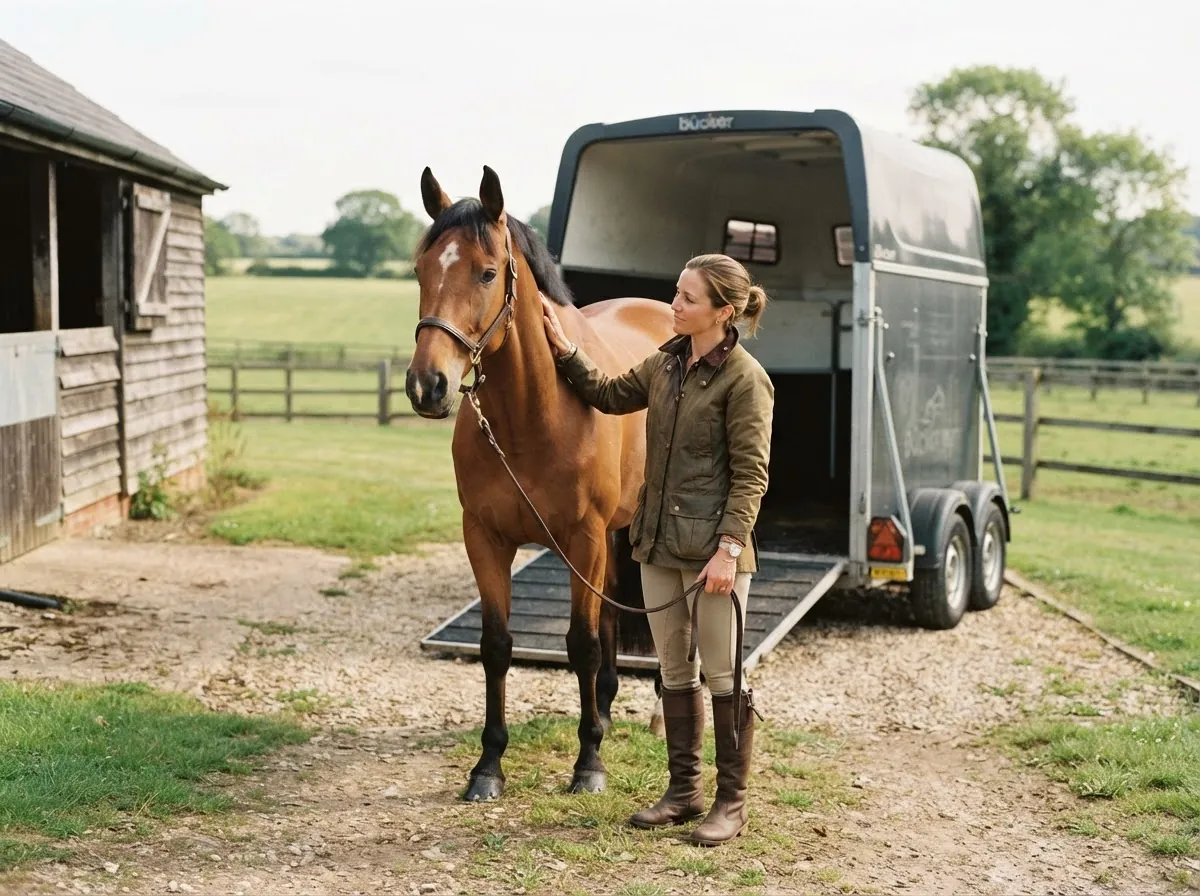
The right equipment matters. Professional horse transport uses air-ride or well-maintained suspension trailers with adequate head height, safe partitions, rubber-matted floors, and proper ventilation. Horses should not travel in cramped conditions, on hard floors, or in trailers with poor airflow — all of which elevate stress and respiratory risk.
For long journeys, protective leg gear, a well-fitted halter, and appropriate shipping boots or wraps reduce the risk of injury from shifting balance. The handler's experience loading and unloading matters as much as the equipment — a calm, competent handler settles a nervous horse, while a rushed or heavy-handed approach can create lasting fear of the trailer.
Shipping fever and travel health
Shipping fever — a respiratory infection that can develop during or after transport — is a real risk, particularly on long journeys or when horses are hauled alongside unfamiliar animals. Reduced travel time, clean ventilation, rest stops, and minimal exposure to other horses all reduce the risk. We monitor horses carefully during and after transport, and we recommend a temperature check and close observation for the first 48 hours after arrival.
What to prepare at the destination
- A clean, safely fenced stall or paddock ready for arrival
- Fresh water available — offer small amounts during travel and full access after
- Familiar forage (hay) ready; maintain current diet for the first week
- A quiet, low-traffic area for the horse to decompress on arrival
- Contact information for a local veterinarian in case of concerns
- Arrangements for a brief quarantine or controlled introduction if other horses are present
The settling-in period
Arrival is not the end of delivery — it is the beginning of a transition. A new horse should be given time to settle into its environment before being asked to work. We recommend two to three days of quiet turnout and rest, followed by light, relaxed work to establish routine. The first week is about building trust and confidence in the new home, not about performance.
LoForti Equestrian delivery service area
Our current delivery service area covers Virginia, North Carolina, Maryland, and West Virginia. Other destinations may be discussed. For horses not purchased through LoForti Equestrian, we also offer dedicated private horse transportation starting at $3.00 per mile.
After delivery: continued support
Our involvement does not end at arrival. If questions arise during the settling-in period — about feed, routine, behavior, or care — we are available to help. A successful delivery is not a transaction; it is the start of a relationship we take seriously.
Frequently asked questions
How far in advance should I schedule horse delivery?
We recommend scheduling as soon as the purchase is confirmed, ideally with at least a week of lead time for local routes and two weeks for long-distance routes. This allows for careful route planning and scheduling around the horse's welfare.
What is shipping fever and how do you prevent it?
Shipping fever is a respiratory infection that can develop during or after transport, caused by stress and reduced immune function. We reduce the risk by minimizing travel time, ensuring clean ventilation, providing rest stops on long routes, and monitoring the horse carefully after arrival. We recommend a temperature check and close observation for 48 hours post-transport.
Do you offer horse transport for horses I didn't buy from LoForti?
Yes. We offer dedicated private horse transportation starting at $3.00 per mile with top-of-the-line equipment and trained handlers. We haul only one customer's horses at a time — no mixed loads or multi-farm stops.
Looking for your next partner?
Tell us about your riding, goals, and ideal horse. We'll reach out when a suitable match becomes available.