How to Prepare for a Horse Trial Ride: Tips for a Productive, Safe Visit
Get the most from a horse trial ride with this guide covering what to bring, what to watch before mounting, how to ride well, and what to do after.
A trial ride is one of the most important conversations you will have with a horse before making a decision. It is also brief, emotionally charged, and easy to misread. Preparation helps you stay observant, stay calm, and stay safe — and it signals to the seller that you are a serious and respectful buyer.
The goal of a trial is not to perform. It is to gather honest information about whether this horse is right for you. That requires watching carefully before you ever get on, riding with your head as well as your heart, and taking real notes before the feelings fade.
Before the Visit
Good trial rides begin before you pull out of the driveway.
Prepare Your Questions
Review the listing and any video in detail. Write down your top questions about the horse's history, temperament, and behavior — questions you want answered before or during the ride. Find out what tack the horse usually goes in and confirm who will ride first.
Handle the Logistics
Confirm the date, time, and location with the seller. Ask about the arena or area where you will ride, including the footing. Ask in advance whether you may take video — for your own review, not for public posting — so there are no surprises on the day.
Plan to arrive on time, not significantly early. An unannounced early arrival can catch a barn unprepared and create a misleading picture of the horse's routine.
Bring the Right People
Your trainer. If there is one person to have at a trial ride, it is the professional who knows how you ride and can give you an honest, experienced perspective. They will notice things that excitement masks, and they can ride the horse before you do to test its reactions firsthand.
A second set of eyes to film is also useful, especially if you have permission to record.
What to Bring
Safety gear: Your certified riding helmet, appropriate boots, and any safety vest you normally wear while riding. Do not show up to a trial without your own helmet.
Tools: A notebook or notes app, your phone for permitted video, your written list of must-haves and deal-breakers, and your honest budget range in mind.
The right mindset: Ride the horse you have in front of you, not the one you hope it will become.
Watch Before You Mount
The fifteen minutes before you get on can tell you more than the ride itself.
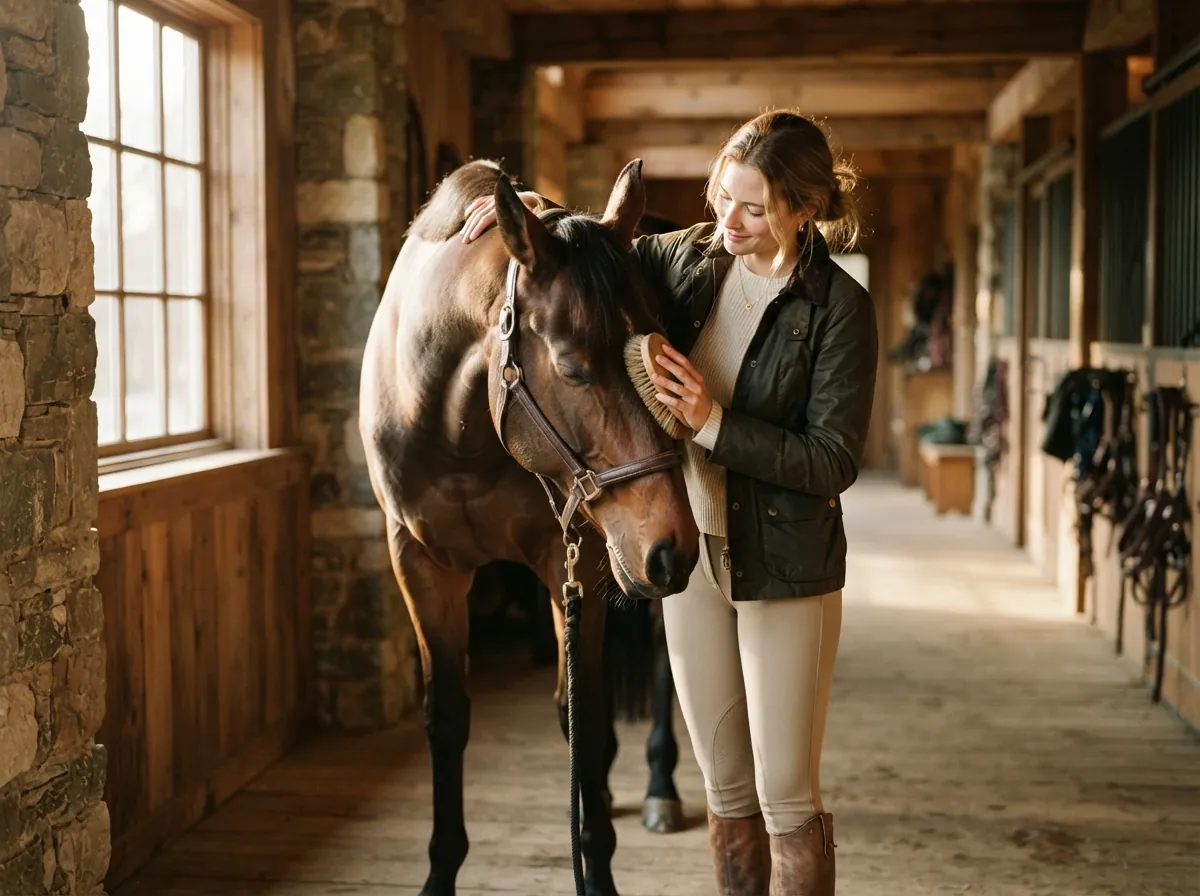
Watch the horse being caught in its stall or field. How does it respond to someone approaching? Watch leading, standing, and cross-tying. Watch it be groomed and how it reacts when its feet are picked up. Watch it being tacked — does it accept the girth and the bridle calmly, or does it show tension?
Then watch the seller's rider go through a full warm-up, including all gaits in both directions. If the horse is going to jump, be ridden in a pattern, or go on a trail segment, watch that too.
Things to Notice
Is the horse relaxed, or does it seem tense and watchful? Does the seller's rider need to work hard to keep the horse settled? Is the warm-up unusually long? Does the horse's way of going match what was shown in the listing video?
A horse that matches its video — in temperament, way of going, and responsiveness — is a horse that has been honestly presented. A horse that feels very different is worth thinking about carefully.
In the Saddle
Start simple. Build gradually. There is no obligation to do anything that moves beyond your comfort zone.
A Logical Progression
Mounting. Use a block. Does the horse stand quietly and wait for your cue to move off?
Walk. Start with a loose rein, then take light contact. Is the horse relaxed and forward without rushing?
Trot. Both directions, including circles and direction changes. Notice how the horse responds to your steering and how rhythmic it feels.
Canter. Both leads. Can you pick up the correct lead? Are the transitions balanced and manageable for your level?
Your discipline. Test something that mirrors your actual plans — a few small fences, a pattern, a short trail loop, a lateral movement. This is perhaps the most important phase of the ride. How a horse behaves at a training show jump or on a quiet trail matters far more than how it behaves in an unfamiliar schooling exercise.
Downward transitions and halt. Can you stop reliably from every gait? Is the rein-back quiet?
Cool-down. Walk on a long rein and watch whether the horse relaxes after work, or stays wound up.
Respect the Horse
A tired horse is not a fair evaluation. Avoid drilling through exercises repeatedly or riding an unusually long session. The seller's guidance about the horse's routine should be respected.
Ask Your Trainer to Ride
If appropriate and agreed with the seller in advance, your trainer riding the horse gives you a professional assessment of how it feels from the inside. Compare impressions privately afterward.
After the Ride
Before discussing price or next steps with the seller, take a few minutes with your trainer away from the yard to debrief while impressions are fresh.
Work through a few key questions:
- How safe did I feel, on a scale of one to five?
- What did I love about this horse?
- What concerned me?
- Did the horse match the listing and the video?
- What did my trainer think?
- What would I want to see on a second visit?
Write these down. Memory is unreliable when emotion is involved, and the horse you rode on Tuesday can blur together with a horse you try on Thursday if you have not captured specific impressions.
Respectful Next Steps
Thank the seller and share a realistic timeline for your decision. Ask about the possibility of a second visit or a pre-purchase exam if the horse is a serious candidate. If you are moving forward, request records and the contact information for the vet and farrier.
If this horse is not the right fit, say so kindly and promptly. A seller who has given you their time deserves a clear answer, not extended silence.
Common Mistakes to Avoid
Riding beyond your comfort to impress the seller or your trainer. A trial ride is not a test you must pass. If something feels beyond your level, say so.
Skipping the ground observation and climbing straight on. How a horse behaves on the ground predicts a great deal about how it behaves under saddle.
Deciding on the spot. The feelings are most intense immediately after the ride. A night's sleep and a conversation with your trainer almost always produce a clearer answer.
Ignoring your trainer's hesitation. If the professional who knows your riding has a concern, that concern deserves a real conversation, not dismissal.
Over-riding the horse. A long, repetitive session that exhausts the horse is not fair — and a tired horse is not the same animal you will own on a regular Tuesday evening.
A Second Visit Is Worth Asking For
A single trial on a good day is helpful. A second visit — in different conditions, at a different time, or after a day off — is one of the most reliable ways to confirm that what you saw was real and consistent. Ask for one before you fall in love.
Ready to Visit a Horse?
LoForti Equestrian welcomes prepared, thoughtful buyers. We encourage bringing your trainer, watching before riding, asking every question you have, and requesting a second visit if you need one.
Start a no-pressure conversation at lofortiequestrian.com/find-your-horse or call (757) 844-5111.
Related pages: Our Process · FAQ · Insights
This article is provided by LoForti Equestrian LLC for general educational purposes only. It is not veterinary, legal, financial, or insurance advice and does not create any professional relationship. Always wear an ASTM/SEI-certified helmet and appropriate footwear when riding, and follow seller and trainer safety guidance at all times.
Looking for your next partner?
Tell us about your riding, goals, and ideal horse. We'll reach out when a suitable match becomes available.