Horse Pre-Purchase Exam Checklist: How to Evaluate a Horse Before You Buy
Use this step-by-step pre-purchase exam checklist to evaluate any horse with confidence — from seller questions to the PPE, trial ride, and paperwork.
The moment you fall in love with a horse on video is not the moment to make a decision. Between that first clip and a signed bill of sale, there is a process — and following it carefully is one of the kindest things you can do for yourself, your wallet, and the horse.
This checklist walks through four stages: asking the right questions, understanding the pre-purchase exam (PPE), conducting a productive trial ride, and reviewing paperwork. Working through each stage methodically turns an emotional purchase into a confident one.
Stage One: Questions to Ask the Seller
Before you schedule a visit, gather information. A well-prepared buyer asks open-ended questions and writes down the answers. Consistent, detailed responses build confidence. Vague ones deserve a follow-up, not an assumption.
History and Use
Start with the basics. How long has the seller owned the horse, and why are they selling? What has the horse done in the last twelve months? Who rides it now, and at what level?
Ask about behavior in daily management situations: How does the horse load and haul? How does it behave for the farrier and during clipping? Does it live alone or with other horses, and have there been any herd or fence issues?
Health and Management
Ask directly about any known soundness, health, or behavioral concerns. Request the contact information for the current veterinarian and farrier. Find out whether the horse has a history of colic, surgery, or extended time off work.
Also ask what is included in the price — tack, blankets, registration papers — and whether those papers are in hand with the seller able to sign a transfer.
Before the vet visit, make sure the horse fits your level: what 'beginner safe' really means.
Stage Two: The Pre-Purchase Exam (PPE)
The pre-purchase exam is a veterinary assessment of the horse on the day of the examination, interpreted in light of your intended use. It is performed by a veterinarian of your choosing — not the seller's vet, and not a shared arrangement. Your vet works for you.
What the PPE Generally Covers
A thorough PPE typically moves through several components:
History and overview. Your vet discusses your goals and reviews any records the seller has provided.
General physical examination. Eyes, heart, lungs, teeth, skin, body condition, and overall health are evaluated.
Lameness and movement. The horse is observed in hand and often on the lunge, on different surfaces, to evaluate how it moves.
Flexion tests. These are commonly used to look for responses that may warrant further investigation.
Optional imaging and labs. Radiographs, ultrasound, and bloodwork — including a drug screen — can be added based on your conversation with your vet, the horse's use, and your budget.
What the PPE Is Not
A PPE is not a pass-or-fail certificate. It is not a guarantee of future soundness. It is a snapshot of this horse on this day, interpreted by your veterinarian in the context of the job you have in mind. Attend if you can, and ask your vet to explain findings plainly. Then make a decision — the pre-purchase exam gives you better information, not a perfect answer.
Stage Three: The Trial Ride Checklist
A trial ride is an interview in both directions. You are evaluating the horse; the horse is showing you who it is. Watch first, then ride.
Before You Get On
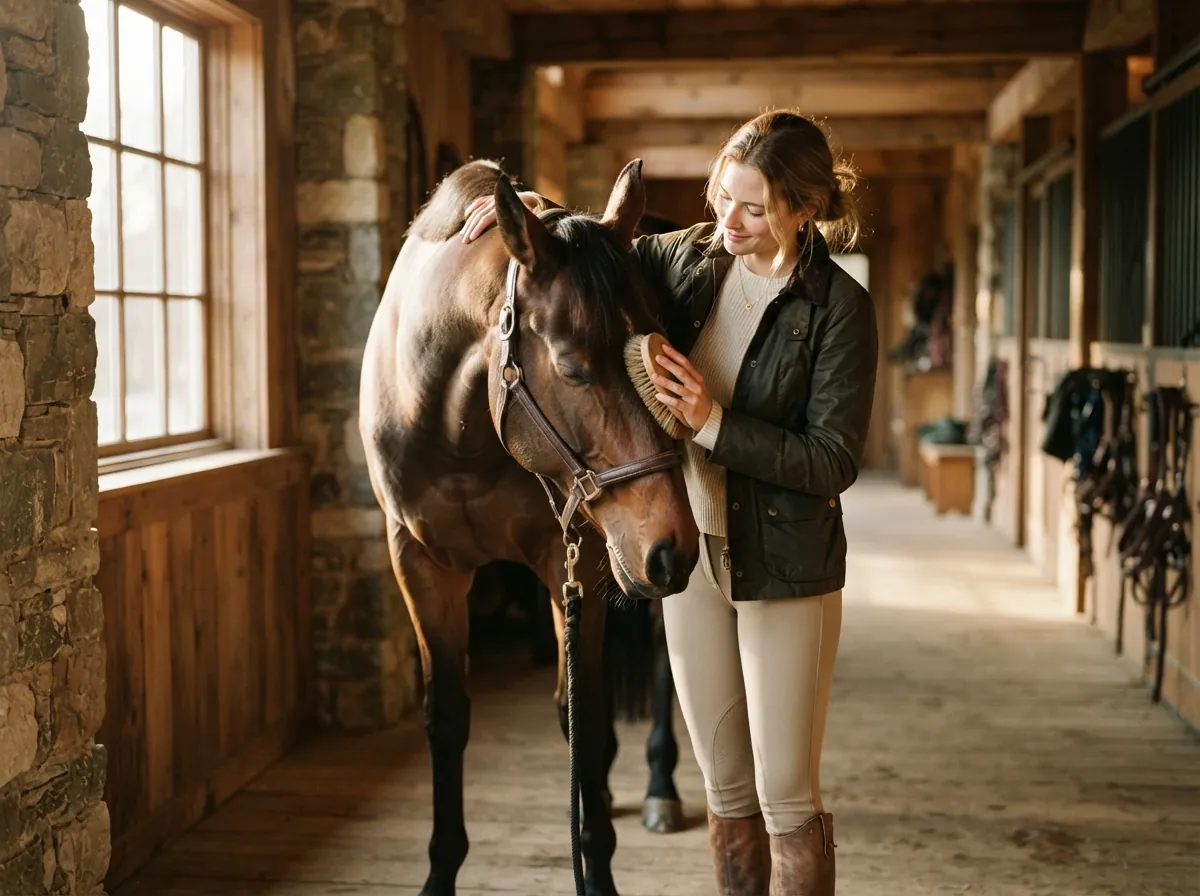
Arrive a few minutes early and watch the horse caught, groomed, and tacked. Notice how it behaves for whoever is handling it. Watch the seller or their rider go through all gaits in both directions before you approach the mounting block.
Have your trainer present. A second experienced eye notices things that excitement hides. Ask your trainer to ride if it is appropriate and the seller agrees.
In the Saddle
Mount from a block and notice whether the horse waits quietly. Work through walk, trot, and canter in both directions. Ask for transitions, circles, and direction changes. Test something that mirrors your actual riding plans — a few small jumps, a trail loop, a pattern.
Rate how safe and comfortable you feel. Confidence and trust on the first ride are meaningful signals, especially for amateur and first-time buyers. Note what surprised you, good or bad, while the feeling is still fresh.
A Second Visit
If possible, come back another day. A different time of day, after a day off, or in different weather conditions reveals how consistent the horse is. This is one of the most reliable ways to confirm that what you saw the first time was real.
Stage Four: Paperwork That Should Accompany a Sale
Clean documentation protects everyone involved. Review each item before closing.
Bill of sale. A written record of buyer, seller, horse identification, price, date, and any terms agreed upon.
Negative Coggins (EIA test). Commonly required for transport, boarding, and competition. Validity periods vary by state; confirm current requirements with your veterinarian.
Health certificate (CVI). Often required when a horse crosses state lines. Your veterinarian can advise on current rules.
Registration papers. If the horse is registered, papers should be in hand with signed transfer documents from the seller.
Veterinary and farrier records. Vaccination history, dental records, deworming, and shoeing history where available.
PPE report. Your veterinarian's written findings and any imaging, for your records and to support insurance applications.
Deposit or trial agreement. Any deposit paid or off-site trial granted should be documented in writing, including refund conditions.
Red Flags Worth Pausing For
Certain situations deserve careful thought before proceeding:
- Pressure to skip the pre-purchase exam, or to use only the seller's veterinarian
- A horse that behaves very differently on a second visit than in videos or the first trial
- Reluctance to share veterinary or farrier contact details
- Ownership documents that don't match the horse in front of you
- "Must decide today" urgency without a clear reason
Walking away from the wrong horse is a successful outcome. The right match is worth waiting for.
Your Decision Worksheet
After the trial and the exam, score each area and discuss the results with your trainer.
Consider temperament and ground manners, suitability for your riding level, fit for your discipline and goals, PPE findings in the context of your plans, whether paperwork is complete and clear, price relative to your budget, your confidence in the saddle, and your trainer's overall view.
Questions still open after that review may be answered by a second visit, a conversation with the seller, or additional veterinary input. If they cannot be resolved, that information is part of the decision too.
Ready to Find a Horse?
LoForti Equestrian believes a transparent process is the foundation of a good match. We encourage trial rides, independent pre-purchase exams, and straightforward paperwork on every horse we represent.
If you are ready to start a no-pressure conversation about your goals, experience, and timeline, visit lofortiequestrian.com/find-your-horse or call (757) 844-5111.
Related pages: Our Process · FAQ · Insights
This article is provided by LoForti Equestrian LLC for general educational purposes only. It is not veterinary, legal, financial, or insurance advice and does not create any professional relationship. Always consult a licensed veterinarian, a qualified attorney, an insurance professional, and your trainer for guidance specific to your horse, your location, and your situation.
Looking for your next partner?
Tell us about your riding, goals, and ideal horse. We'll reach out when a suitable match becomes available.