What 'Beginner Safe' Really Means — and How to Verify It
'Beginner safe' means different things to different sellers. Learn which traits matter, how to test the claim on a visit, and what red flags to watch.
"Beginner safe." It is one of the most commonly used phrases in horse listings, and also one of the most easily misunderstood.
To an experienced professional, a horse that does not buck and stops reliably might earn that description. To a parent buying a first horse for a ten-year-old, the phrase may suggest an animal that will look after a child in nearly any situation. Both interpretations are sincere. Neither is automatically correct.
No horse is risk-free. Horses are large, reactive animals with their own instincts and perceptions, and even the most reliable one can be startled. The goal is not to find a perfect horse — it is to find one whose temperament, training, and habits make it genuinely forgiving for a specific rider, in a specific environment, with appropriate support in place.
Safe for Whom, Where, and When?
Every safety claim carries three hidden variables. Asking about each one before you accept the description at face value can save an enormous amount of trouble.
Whom? Who actually rides and handles this horse day to day? A professional, a teenager in a lesson program, an adult amateur, or a small child? Ask specifically about the least experienced person who works with the horse regularly — and ask how that typically goes.
Where? A horse can be relaxed in a familiar indoor arena and very different on a busy show grounds or a trail through unfamiliar terrain. Ask where the horse has been ridden and how it behaved in each setting.
When? After regular work, or after a week off? In calm summer weather, or on a windy winter morning when pasture mates are calling? Ask how the horse behaves when its routine changes, not just on its best day.
Phrases That Deserve a Follow-Up Question
When you hear certain descriptions in a listing or a conversation, press gently for specifics before accepting them.
"Kid safe." Ask how old the child was, how experienced, and what exactly they did with the horse — walk only, trot and canter, jump, trail?
"Anyone can ride." Ask who has actually ridden the horse in the past few months. Ask if you can watch someone at your level ride today.
"Packer." Packs whom, and over what terrain? What does the horse do if the rider gets left behind or loses balance?
"Never offered to buck." Ask whether it has ever spooked or bolted, and what that looked like. Ask what tends to set it off.
"Was a lesson horse." When, for how long, and why did it leave the program?
Specific, consistent answers are reassuring. Vague ones are a signal to ask more questions.
The Traits That Actually Matter
Behind every genuinely forgiving horse is a set of observable habits. These are what "beginner safe" should actually describe — not a label, but a pattern of behavior.
Stands still. Waits at the mounting block, stands when the rider is off balance, and halts reliably from all gaits, even when the aids are clumsy.
Tolerates mistakes. Does not react sharply to a bumped mouth, an accidental squeeze, or a rider losing a stirrup. Tends to slow down, rather than speed up, when uncertain.
Small, brief reactions. Any horse can startle. A forgiving horse tends to react in place, stay with the rider, and settle quickly rather than escalating.
Good ground manners. Leads, ties, allows its feet to be picked up, and respects personal space for handlers of different sizes and confidence levels.
Consistent day to day. Behaves similarly across visits, weather changes, and routine variations — without needing extensive preparation before each ride.
Experience in context. Has done the actual job the new rider wants — lessons, trail, small shows — with riders at a comparable level, not just with professionals.
A note worth keeping in mind: a highly trained horse is not automatically a beginner horse. Many genuinely forgiving horses are modest athletes with generous minds. Often the best teacher is the one who has done simple things, many times, for many different riders.
Matching to the Rider
"Beginner" covers a wide range of people. Being specific about who will be riding helps narrow the search.
Young children often do best with a smaller, calm horse or pony experienced with children — tolerant of uneven aids and lots of handling. Supervision and a capable adult handler are essential.
Teen beginners benefit from a steady, honest horse that can grow with lessons — forgiving but responsive enough to teach correct aids.
Adult beginners often feel risk more acutely. A confidence-building horse with a calm, predictable temperament and solid ground manners is especially valuable.
Returning riders benefit from a sensible, experienced horse that rebuilds timing and feel without demanding too much. Choose for the rider today, not who they were years ago.
Family horses need to suit several riders of different sizes and styles. Ask directly how the horse handles changes of rider.
Testing the Claim on a Visit
You cannot verify "beginner safe" by watching a professional ride. Build the visit to resemble the real life the horse will have.
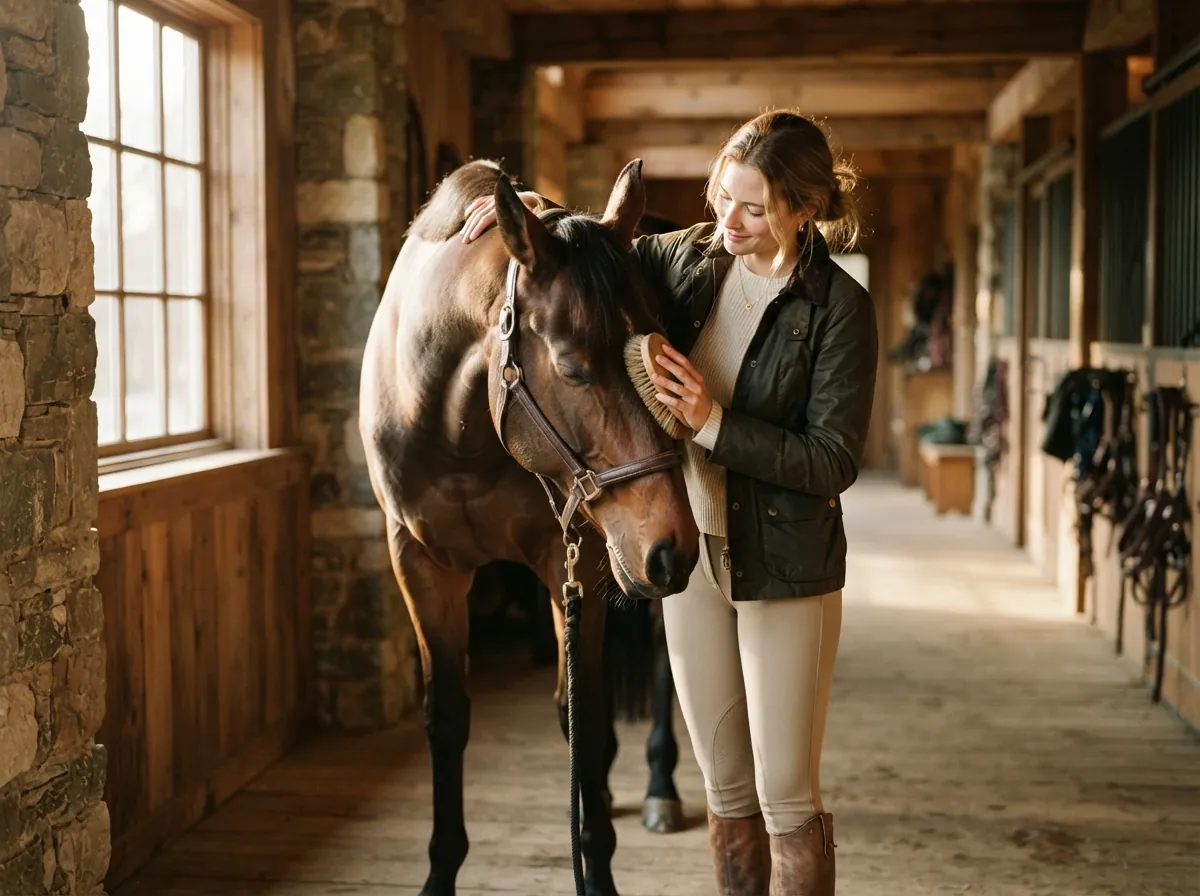
Arrive before the horse is prepared. Ask to see it caught, groomed, and tacked from the stall or field. Watch how it behaves when someone less familiar handles it.
Watch the seller ride first. Note how much correction the rider applies to keep the horse settled. A well-prepared horse should require minimal intervention.
Have your trainer or instructor ride next. A trusted professional can test reactions and responsiveness on the rider's behalf before the beginner gets on.
Then the actual rider. Encourage them to ride at their real level, small mistakes included. Does the horse stay patient when things are less than perfect?
Change something. With the seller's permission and safety as the priority: lead the horse past something new, ride where other horses come and go, or walk outside the arena. Watch the reaction and how quickly the horse recovers.
Come back a second time. A return visit in different conditions is one of the most reliable ways to confirm consistency. Ask about a second visit before you fall in love at the first.
Always wear an ASTM/SEI-certified helmet and appropriate footwear when trying horses, and follow the seller's and your instructor's safety guidance.
Then confirm it with a vet: use our pre-purchase exam checklist and the pre-purchase vetting guide.
Honest Expectations and Red Flags
Be cautious when the story about a horse is more polished than the horse itself.
Concerning process signs: The horse is already heavily worked by the time you arrive. You are not allowed to watch it handled or tacked. Your instructor is discouraged from riding.
Concerning behavior signs: Large spooks excused as "just fresh." Reluctance to stand at the mounting block. Rushing or pinning ears when the rider is unbalanced.
Concerning information signs: No one at the beginner's level has ridden it recently. Vague answers about why it is for sale. Reluctance to discuss behavior after time off.
Concerning pressure: Urgency to decide before a second visit. Resistance to an independent pre-purchase exam. Promises that a horse is one hundred percent safe.
What reasonable honesty sounds like: "She's been ridden by our lesson students for two years. She can get a little quick heading home, so we keep the first rides in the ring." Specific, honest, and useful.
Keeping a Safe Horse Safe
Even the most forgiving horse can develop habits from inconsistent handling. The purchase is the beginning, not the end.
Keep lessons going in the first months. Schedule periodic professional tune-ups to correct small issues before they grow. Introduce change gradually — new barn, new herd, new routine — and give the horse time to settle before adding new demands. Check tack fit when the horse arrives and again as its body changes. If behavior changes suddenly, discuss it with your trainer and veterinarian before assuming it is attitude.
Safety is something you keep building. It is not a feature that arrives with the horse.
Looking for a First Horse?
LoForti Equestrian asks detailed questions about every rider and describes horses plainly — including what a horse is not right for. If you are searching for a first horse, a family horse, or a confidence-builder, start a no-pressure conversation at lofortiequestrian.com/find-your-horse or call (757) 844-5111.
Related pages: Our Process · FAQ · Insights
This article is provided by LoForti Equestrian LLC for general educational purposes only. It is not veterinary, legal, financial, or insurance advice and does not create any professional relationship. Always consult a licensed veterinarian, a qualified trainer, and other licensed professionals for guidance specific to your horse and situation.
Looking for your next partner?
Tell us about your riding, goals, and ideal horse. We'll reach out when a suitable match becomes available.